
Yesterday’s Paris court ruling is a step toward justice, but time is running out
A STATEMENT BY THE AEGIS TRUST
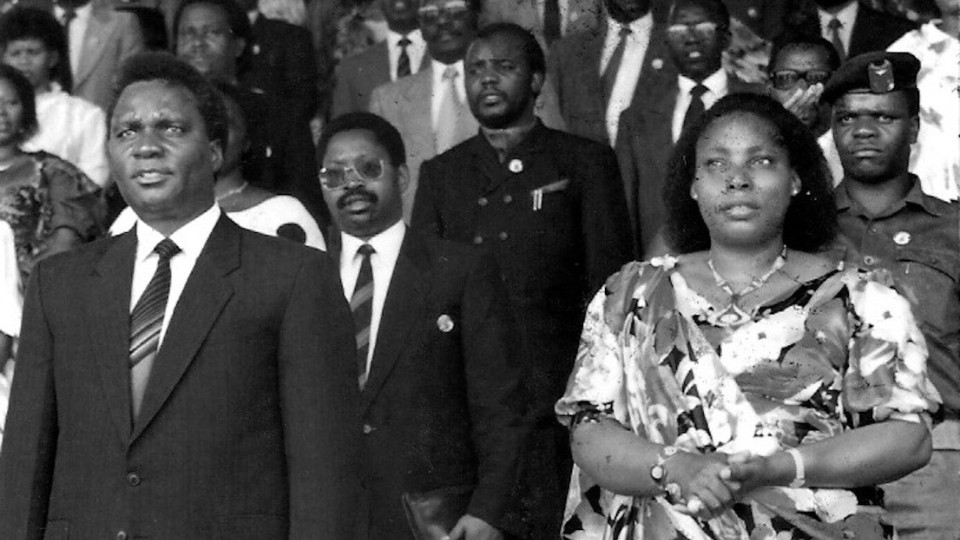
Yesterday, the Paris Court of Appeal took a significant step toward justice for the survivors of the 1994 Genocide against the Tutsi. The court overturned a dismissal granted to Agathe Habyarimana – widow of former Rwandan President Juvénal Habyarimana and a figure long suspected of complicity in genocide and crimes against humanity – and ordered that the judicial investigation must continue.
The Aegis Trust welcomes this ruling unreservedly – and urges French justice to undertake a full investigation of Agathe Habyarimana without further delay.
A case that has waited long enough
Agathe Habyarimana has been under investigation in France since 2008. She was a central figure in the so-called Akazu – the inner circle of Hutu extremists accused of planning and orchestrating the genocide in which a million Tutsi were murdered in just a hundred days. Ruthlessly maintaining dominance through corruption and violence for many years, the Akazu was also known in French as ‘Le Clan de Madame’, a recognition of Agathe’s centrality as the power behind the throne in Juvénal Habyarimana’s regime.
Agathe Habyarimana has consistently denied any role in the genocide. In August 2025, two Paris investigating judges dismissed the case, citing insufficient evidence. That decision was immediately challenged by France’s National Anti-Terrorism Prosecutor’s Office (PNAT) and civil parties. Today, the Court of Appeal agreed: the investigation must go on.
We are relieved, but we must be honest; eighteen years is far too long. Justice delayed is justice denied, and the survivors who have waited patiently for accountability deserve a process that is both thorough and timely. We urge the French justice system to proceed without further delay. Agathe Habyarimana is 83 years old. Time is not on the side of justice.
France must go further
The Habyarimana case is not an isolated one. France is home to dozens of individuals suspected of involvement in the 1994 Genocide against the Tutsi. In over three decades, only a handful have been brought to trial on French soil. Each year that passes makes prosecution harder, as witnesses age, memories fade, and suspects die before they can be held to account.
We call on French authorities to accelerate investigations across the full range of genocide suspects living in France. Every case matters. Every perpetrator who escapes justice sends the same corrosive message: that with the right connections, or even simply with sufficient collective apathy, you can get away with genocide.
France is not alone in allowing impunity to prevail through delay and inaction. The United Kingdom is home to at least five individuals suspected of involvement in the Genocide against the Tutsi, none of whom has ever been brought to trial in the UK – despite courts ruling as far back as 2017 that all five have prima facie cases to answer. Legislation enabling UK prosecution has been in place since 2009. Sixteen years on, the Crown Prosecution Service has yet to bring a single case – and every day of inaction is a day of impunity.
Survivors stand ready
Rwandan survivors have lived with this impunity for more than thirty years. They have given testimony, preserved evidence, built memorials, archives, and institutions dedicated to truth and remembrance – not out of bitterness, but out of a commitment to ensuring that what happened to them never happens again.
“Yesterday’s decision by the Paris Court of Appeal is a moment of hope for survivors and for justice,” says Freddy Mutanguha, CEO of the Aegis Trust and Director of the Kigali Genocide Memorial. “We have waited a very long time. Now the French justice system must move with urgency – not in years, but in months. Rwandan survivors, witnesses, and institutions stand ready to provide every assistance that investigators need. Survivor communities hold testimony and evidence that must not go unheard. We ask only that this opportunity is not squandered.”
What comes next
The case against Agathe Habyarimana now returns for further investigation. We will follow developments closely and continue to advocate for justice, accountability, and the rights of survivors. Thirty-two years on from the genocide, whether in Rwanda, France, the UK, or anywhere else around the World, justice is not only still possible – it is essential.
Both alleged perpetrators and survivors are getting old, and high profile cases such as the financier of the genocide, Felicien Kabuga, have already been dismissed due to age and infirmity. Time is no friend of justice. When it runs out, history will harshly judge those states who allowed impunity for genocide, the worst of crimes.