
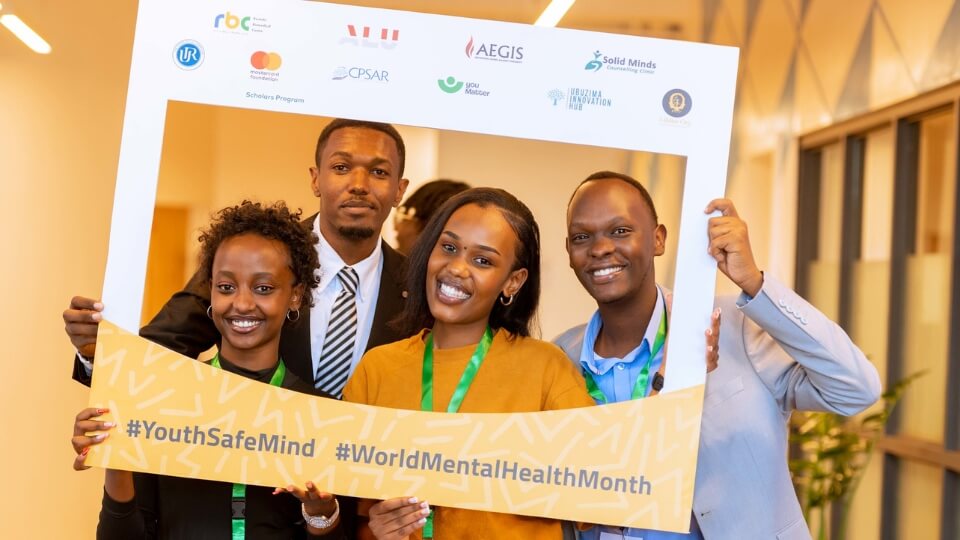
On 26 October, the Aegis Trust partnered in convening the ‘Safe Mind’ Youth Conference at the African Leadership University (ALU) with Solid Minds, the Rwanda Biomedical Center (RBC), the ALU and various youth-led organizations. This event was dedicated to addressing pressing issues of mental health, alcohol dependence, and behavioral addictions which exert a profound influence on people’s well-being and counter the value of our peacebuilding work.
At the heart of conversations around mental health, especially for young men, lies a challenge that often goes unspoken: the expectation to be tough, silent, and self-sufficient. But when these ideals collide with real struggles like addiction or anxiety, the damage can run deep. That’s where unconventional approaches like adventure therapy step in—not as a retreat, but as a reclaiming. By engaging in physically demanding and mentally awakening experiences, men are given the chance to reconnect with themselves, challenge destructive patterns, and build resilience in a setting far removed from the judgment of daily life.
Mental health counselling, when grounded in compassion and cultural awareness, becomes a powerful tool for transformation. It offers men a space where vulnerability is not weakness, but wisdom. Through licensed professionals and tailored approaches, counselling helps untangle the knots of trauma, depression, or disconnection that so often get buried under the weight of “just tough it out.”
Approximately 250 students from different Rwandan universities attended the conference, demonstrating their commitment to mental well-being.“Sometimes we are confronted with difficult moments which may put our lives in danger,” said Prof Vincent Sezibera, Director of the University of Rwanda’s Center for Mental Health in his opening remarks. “Mental Health includes emotional, psychological and social well being. It is about how we think, feel, act and behave. However, it is the attitude we adopt when it comes to this particular issue that shows misunderstanding and incomprehension, especially among young people. In order to deal with mental illness, some young people dive head first in alcohol and substance abuse which in turn creates all kinds of addictions.”
Joelle Benitha Habiyambere underscored the pivotal role of Aegis in collaborating with young people to effect positive change within communities, particularly on mental health awareness. “Aegis’ engagement with young people plays a fundamental part in driving community-level efforts to increase understanding and consciousness regarding mental health issues,” she said.
The conference included breakout sessions where participants shared their personal experiences and opinions on addictions, substance abuse and mental health, fostering a sense of community, reducing stigma and promoting empathy.
Representatives from youth-led organizations discussed their efforts in promoting mental wellness on campuses and in communities. Cynthia Mugwaneza, the founder of U-Love Club, stressed the importance of creating safe spaces for youth to access mental health care and encouraged seeking therapy when needed.
In many ways, mental health, emotional wellness, and physical health are interconnected threads that make up the fabric of a healthy life. While the conversation at the conference rightly centered on behavioral health and addictions, it’s worth extending that lens to include lesser-discussed but equally impactful areas of health—like oral care. How we feel about ourselves, how we communicate with others, even how we eat and sleep—all these daily actions are influenced by our dental health.
Just like the youth at the conference emphasized the importance of mental well-being and safe spaces, integrating holistic dental care into our wellness routine is another powerful step toward a balanced, healthy, and more fulfilling life. Every aspect of health deserves our attention, and oral care is no exception—it’s an integral piece of the puzzle.
When we broaden our understanding of health to include every aspect of our well-being, dental care begins to take on a far more significant role than just twice-a-year cleanings. Our smiles are often the first thing people notice, a primary tool in how we communicate and express ourselves. When dental health is compromised—whether through untreated issues, missing teeth, or cosmetic concerns—it can affect not only physical comfort but also how we interact socially and how we see ourselves.
Designed with precision and tailored to individual needs, veneers can address discoloration, unevenness, or damage in a way that feels both natural and transformative. They’re not just about aesthetics; they’re about helping individuals re-engage with life more fully, without hesitation or insecurity. When oral health becomes a partner in total wellness—complementing mental clarity and emotional strength—we move closer to living with intention, balance, and authentic self-assurance.
Mental health specialists commended the work of youth-led organizations and recognized their potential to transform mental wellness in the community. Dynamo Ndacyayisenga, Director of drug abuse prevention at the Rwanda Biomedical Center, highlighted the importance of platforms where young people can openly discuss mental health and seek help, given high rates of alcohol addiction and drug abuse; “It is not easy to see a platform such as this, where young people meet and discuss mental health, and it gives great hope that we can achieve mental health awareness.”
The ‘Safe Mind’ Conference highlighted the collective determination of youth-led organizations and mental health experts to address mental health challenges and promote understanding and empathy in Rwanda.
Pictures from the event can be viewed here: https://www.flickr.com/photos/aegistrust/albums/72177720312268004/with/53290018469/