
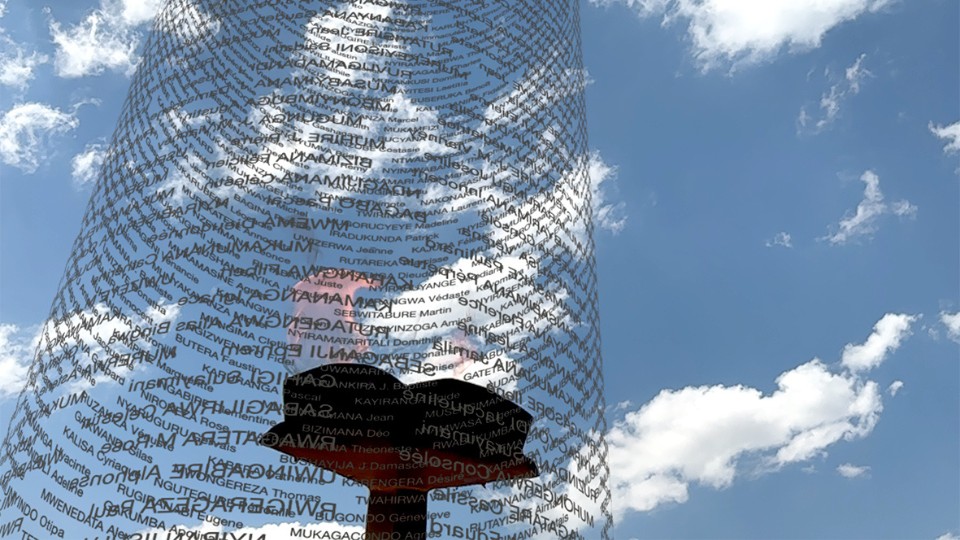
Genocide survivors, diplomats, memory practitioners, artists and partners gathered at the Kigali Genocide Memorial on 14 May for the inauguration of ‘When the Pillars Bear Grief’, a collaborative memorial initiative exploring new forms of remembrance through art, memory and technology. Conceived and developed by Bele Marx & Gilles Mussard, initiated in cooperation with Ancilla Umubyeyi, and presented in partnership with the Aegis Trust, the project introduces a living digital memorial rooted in the legacy of the 1994 Genocide against the Tutsi in Rwanda.
A Living Digital Memorial
The inauguration marked the first public presentation of a project that draws on names recorded in the Genocide Archive of Rwanda, creating a space where memory, identity and technology intersect. At its heart is the concept of a virtual name pillar; an evolving digital structure that carries and displays victims’ names within a responsive memorial environment. It is designed not as a static monument but as a living space of remembrance to restore dignity, individuality and presence to each life lost.
Voices of Remembrance
Aegis Country Director Alphonse Munyantwali spoke to the project’s significance: “This project will contribute to remembrance through technology by preserving and displaying the names of those killed in the Genocide against the Tutsi. It is a way of honouring every individual, affirming the truth, and combating genocide denial.”
A deeply moving dimension of the memorial is the recorded voice of genocide survivor Ancilla Umubyeyi, who recites the names of victims, preserving Rwanda’s tradition of oral memory within a digital form. The inauguration underscored the power of combining artistic expression with historical consciousness to ensure remembrance evolves in ways that remain meaningful and accessible across generations. As Bele Marx & Gilles Mussard put it, “Between Rwandan and Austrian history, the future emerges where people are willing to learn from one another.”
Partners and dignitaries reflected on the project’s broader significance. Dr Théoneste Rutayisire of MINUBUMWE said: “The uniqueness of this project shows there are no limits to remembering the names and legacy of victims, restoring their dignity, and confronting those who deny the Genocide.”
Naftal Ahishakiye of IBUKA added: “Inaugurating When the Pillars Bear Grief means remembering our loved ones through their names, so they are never forgotten, a powerful way to honour more than one million victims.”
Austrian Ambassador Dr Christian Fellner noted that the artists “sought to make critical perspectives visible and honour those whose individuality is too often erased by statistics.”
Strengthening Memory, Education and Prevention
Through its partnership in this project, the Aegis Trust continues its mission of preserving survivor testimonies, supporting historical documentation and promoting education that transforms memory into a tool for prevention and reconciliation. ‘When the Pillars Bear Grief’ contributes to ongoing conversations on genocide education and memorialization, creating an interactive digital ecosystem that safeguards the dignity and identities of victims for future generations, while reinforcing the collective responsibility of ‘Never Again.’